

Part 1: Product Overview
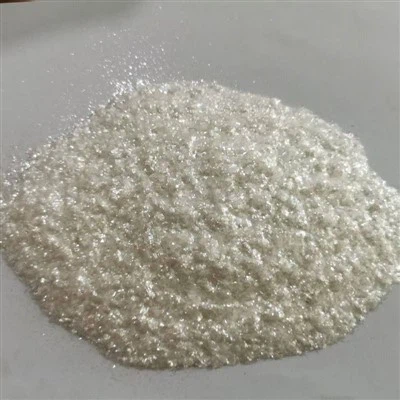
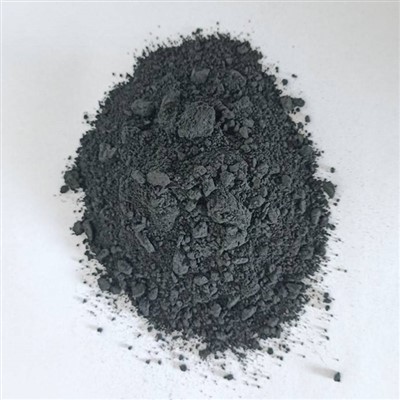
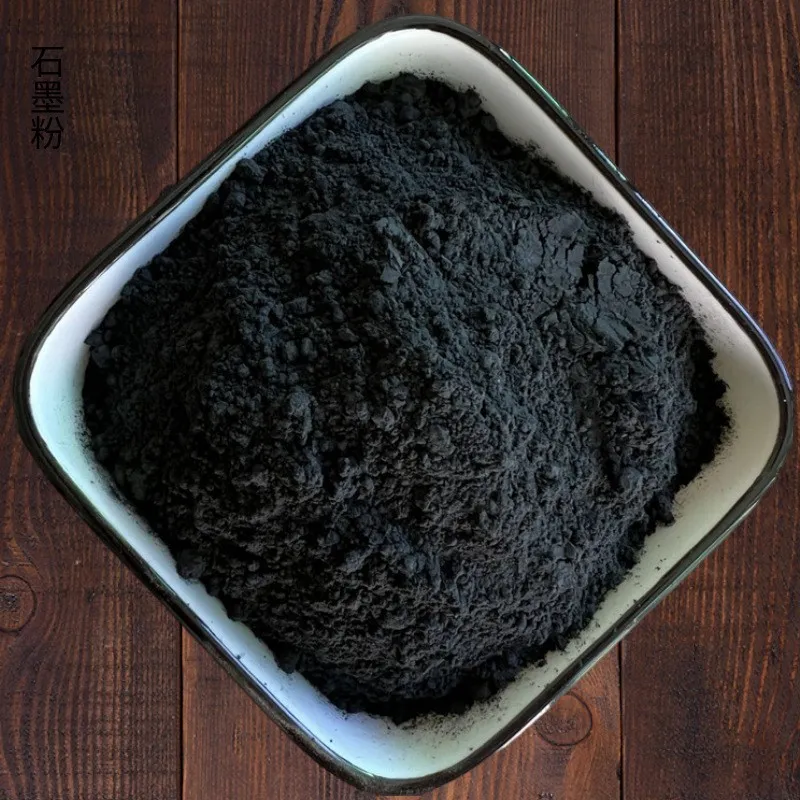
Microcrystalline graphite, also known as cryptocrystalline graphite or earthy graphite, is an important form of natural graphite. Its crystal diameter is usually less than 1 micrometer, and the crystal shape can only be observed under an electron microscope. It features an earthy or massive structure, hence the common name "earthy graphite". As one of the crystalline carbon minerals, it is grayish-black or steel-gray with metallic luster, soft in texture (Mohs hardness 1–2), greasy to the touch, and easily stains hands.
China has the world's largest reserves of microcrystalline graphite, with a predicted resource volume of approximately 1 billion tons and an annual output accounting for more than 80% of the global total. It is mainly distributed in Lutang (Chenzhou, Hunan), Panshi (Jilin), Inner Mongolia, and other regions. Among them, the Lutang mining area in Chenzhou, Hunan Province, accounts for over 70% of the national total reserves and is known as "gold sand".
Our microcrystalline graphite products are selected from high-quality ore sources in Chenzhou, Hunan, with a fixed carbon content of up to 60%–88% (some exceeding 90%) and extremely low contents of sulfur, iron, and other impurities. The products are divided into two categories:
- WT Series: With strict iron control, suitable for high-end fields such as batteries.
- W Series: Without iron restrictions, suitable for traditional fields such as foundry.
The particle size fully covers from 45 mesh to 12,000 mesh. They are widely used in more than 20 fields, including foundry release agents, refractory materials, battery electrodes, pencil and welding rods, carburants, and anti-corrosion coatings.
Core Value of Microcrystalline Graphite
As the most abundant and cost-effective type of natural graphite, microcrystalline graphite plays an irreplaceable role in both traditional industries and new energy sectors due to its unique microcrystalline structure, high grade, and low impurity characteristics.
Part 2: Core Advantages and Properties

Fine Crystals & Strong Plasticity
Crystal diameter < 1 μm, specific surface area 1–5 m²/g. It has excellent plasticity and adhesion, forming a dense and smooth coating in foundry applications to prevent sand adhesion.

Excellent Chemical Stability
Chemically stable, unaffected by strong acids and alkalis, with outstanding high-temperature resistance: melting point ≈ 3800–3900°C (4073–4173 K), boiling point 4250°C.

High Fixed Carbon & Superior Grade
Raw ore fixed carbon is generally 60%–85%, and high-quality ore can exceed 90%. After purification, it can meet high-end application requirements, with high-purity products reaching above 99.99% fixed carbon.

Low Harmful Impurities
Extremely low contents of sulfur, iron, phosphorus, nitrogen, molybdenum, hydrogen, etc. The WT Series has strict limits on acid-soluble iron; the top-grade WT99.99 Series controls acid-soluble iron ≤ 0.005% (50 ppm), satisfying requirements for batteries and special carbon materials.

Good Electrical & Thermal Conductivity
Excellent electrical and thermal conductivity, suitable for battery electrodes and conductive materials.

Good Lubricity
Natural self-lubricating property with low friction coefficient, usable as a solid lubricant.
National Standard Grading & Complete Specifications
|
WT Series (iron-controlled) |
Fixed carbon 75%–99.99%, strict acid-soluble iron control, for batteries and special carbon materials. |
|
W Series (non-iron-controlled) |
Fixed carbon 50%–90%, for foundry, refractories, dyes, etc. |
Key Indicators of Microcrystalline Graphite (reference GB/T 3519-2008/2023)
|
Item |
Unit |
Range |
|
Fixed Carbon Content |
% |
50–99.99 (adjustable) |
|
Volatile Matter |
% |
0.8–4.5 |
|
Moisture |
% |
0.2–3.0 |
|
Acid-Soluble Fe (WT) |
% |
0.005–1.0 |
|
Particle Size |
mesh |
45–12000 |
|
Melting Point |
°C |
3850±50 |
|
Density |
g/cm³ |
2.09–2.23 |
|
Specific Surface Area |
m²/g |
1–5 |
Note: Actual indicators are subject to the product test report.
Part 3: Microcrystalline Graphite vs. Flake Graphite
|
Item |
Microcrystalline Graphite |
Flake Graphite |
|
Crystal Diameter |
< 1 μm (visible under electron microscope) |
0.05–1.5 mm (visible to naked eye) |
|
Crystal Structure |
Cryptocrystalline aggregate, microcrystalline |
Hexagonal layered, well-crystallized |
|
Raw Ore Grade |
60%–85%, few over 90% |
2%–25% |
|
Specific Surface Area |
1–5 m²/g |
Smaller |
|
Washability |
Poor (impurities closely associated) |
Excellent (good floatability) |
|
Lubricity |
Good |
Best |
|
Plasticity |
Excellent, strong adhesion |
Excellent |
|
Luster |
Steel-gray, metallic luster |
Strong metallic luster |
|
Main Applications |
Foundry coatings, battery electrodes, carburants |
Refractories, anode materials, expanded graphite |
|
Price |
Lower (cost-effective) |
Higher |
|
China Reserves |
World's richest |
Abundant |
Part 4: Main Application Fields
Microcrystalline graphite is widely used in traditional and new energy industries due to its high grade, low impurities, microcrystalline structure, and excellent plasticity.
1. Foundry Industry (Traditional Core Application)
Indispensable release agent and coating raw material for foundry.
Functions:
Release agent / mold coating: Forms a smooth film to prevent sand adhesion and improve surface finish.
Lubrication: Improves flowability and mold release performance.
Anti-permeability: Blocks surface pores to prevent molten iron penetration.
Typical Uses:
Manual molding of thin-walled small castings
Mold coatings for smoothness, reduced cracks and porosity
Foundry release agents, graphite sand, graphite balls
Recommended Grade: W Series, fixed carbon 65%–85%, particle size 100–325 mesh.
2. Battery & Electro-carbon Products (High-Growth Sector)
Especially WT Series with strict iron control.
Applications:
Battery carbon rods for dry and alkaline batteries
Cathode conductive additives
Lithium-ion battery anode materials: high graphitization, stable voltage platform, low cost, high lithium intercalation capacity; usable after coating, purification, and modification
Electrode compounds
Recommended Grade: WT Series, fixed carbon 99.9%–99.99%, strict acid-soluble iron control, particle size -45 μm or -75 μm.
3. Refractory & Metallurgical Industry
Refractory ingredients: refractory bricks, castables
Steelmaking carburant: increases carbon content in steel
Ingot casting mold powder: prevents oxidation
Electrode paste raw material
4. Pencil & Welding Electrode Industry
Pencil leads
Welding electrode coatings
Graphite emulsion for wire drawing and forging release
Recommended Grade: WT/W Series, fixed carbon 94%–99%, particle size -45 μm or -75 μm.
5. Lubrication & Friction Materials
Solid lubricants for machinery
Lubricating oil additives
Graphite bearings
6. Anti-Corrosion Coatings & Functional Coatings (Emerging)
Waterborne anti-corrosion coatings: "tortuous effect" blocks corrosive media
Conductive coatings
Road anti-skid coatings
7. New Energy & Advanced Technology
Lithium-ion battery anodes (modified porous microcrystalline graphite)
Supercapacitors
Graphene raw material
Wave-absorbing materials
Isotropic graphite for high-end applications
8. Other Applications
Flue gas desulfurization
Industrial anti-corrosion
Black pigments and dyes
Oilfield drilling fluid additives
Rubber & plastic functional fillers
Part 5: Product Specifications & Technical Parameters
Classified according to GB/T 3519-2008/2023.
Product Series Overview
|
Series |
Code |
Fixed Carbon |
Iron Requirement |
Main Applications |
|
WT (Iron-controlled) |
WT99.99–WT75 |
75–99.99% |
Strict acid-soluble Fe control |
Batteries, special carbon, pencils |
|
W (General) |
W90–W50 |
50–90% |
No iron restriction |
Foundry, refractories, dyes |
WT Series (Iron-Controlled)
|
Grade |
Fixed Carbon ≥ |
Volatile Matter ≤ |
Moisture ≤ |
Acid-Soluble Fe ≤ |
Main Applications |
|
WT99.99-45/-75 |
99.99 |
– |
0.2 |
0.005 |
Batteries, special carbon |
|
WT99.9-45/-75 |
99.9 |
0.8 |
1.0 |
0.15 |
Pencils, batteries, welding rods |
|
WT99-45/-75 |
99 |
0.8 |
1.0 |
0.15 |
Pencils, batteries, welding rods |
|
WT98-45/-75 |
98 |
1.0 |
1.5 |
0.4 |
Pencils, batteries, welding rods |
|
WT95-45/-75 |
95 |
– |
1.5 |
0.4 |
Pencils, batteries, welding rods |
|
WT90-45/-75 |
90 |
2.0 |
– |
– |
Release agents, bearings |
|
WT80-45/-75 |
80 |
– |
– |
– |
Release agents, bearings |
W Series (Non-Iron-Controlled)
|
Grade |
Fixed Carbon ≥ |
Volatile Matter ≤ |
Moisture ≤ |
Main Applications |
|
W90-45/-75 |
90 |
3.0 |
– |
Foundry, refractories, dyes |
|
W85-45/-75 |
85 |
3.4 |
– |
Foundry, refractories, dyes |
|
W80-45/-75/-150 |
80 |
3.6 |
– |
Foundry, refractories, dyes |
|
W75-45/-75/-150 |
75 |
4.0 |
3.0 |
Foundry, refractories, dyes |
|
W70-45/-75/-150 |
70 |
4.2 |
– |
Foundry, refractories, dyes |
|
W65-45/-75/-150 |
65 |
4.2 |
– |
Foundry, refractories, dyes |
|
W60-45/-75/-150 |
60 |
4.5 |
– |
Foundry, refractories, dyes |
|
W50-45/-75/-150 |
50 |
4.5 |
– |
Foundry, refractories, dyes |
Particle Size Specifications
|
Model |
Size |
Typical Applications |
|
-45 |
≤45 μm (~325 mesh) |
Battery materials, high-end coatings |
|
-75 |
≤75 μm (~200 mesh) |
General use, pencils, welding rods |
|
-150 |
≤150 μm (~100 mesh) |
Foundry, refractories |
|
100–325 mesh |
Standard industrial |
Foundry release, bearings |
|
800–12000 mesh |
Ultra-fine powder |
Anti-corrosion coatings, oil additives |
Hot Tags: earth-like graphite, China earth-like graphite manufacturers, suppliers, factory, graphite, Earth like Graphite, Crystalline Flake Graphite