

Part 1: Product Overview
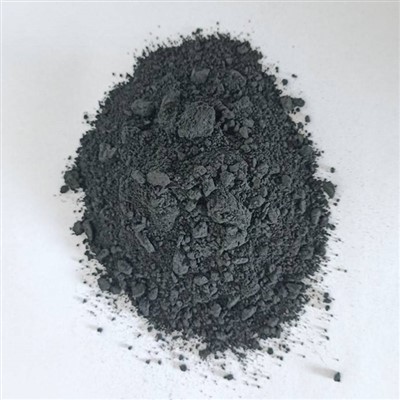
Activated Clay is a porous adsorbent with a microporous structure and large specific surface area, produced from clay minerals (mainly bentonite) through inorganic acid activation, water rinsing, and drying. It appears as a fine powder in milky white, off-white, or pink, odorless, tasteless, and non-toxic.
During acid activation, impurities are dissolved, exchangeable cations between layers are replaced, and partial metal ions at the edges of the octahedral layer are leached, which "loosens" the montmorillonite lattice. The specific surface area increases from 80 m²/g of raw clay to 200–400 m²/g. This unique microstructure gives activated clay strong adsorption and catalytic capabilities, making it a core material in oil decolorization, petroleum refining, chemical purification, and other fields.
Our activated clay is made from high-quality bentonite ore using advanced wet activation technology, refined through a series of processes including selection, activation, water washing, drying, and grinding. The product features strong decolorization power, high activity, low oil retention, fast filtration speed, etc. All indicators meet or exceed the industrial standard HG/T 2569.
Core Value of Activated Clay
Upgrading natural bentonite into a high-efficiency adsorbent through acid activation technology. With strong decolorization ability and chemical inertness, it safeguards edible oil quality, improves chemical product purity, and treats industrial waste (wastewater, waste gas, waste residue).
Part 2: Core Advantages & Characteristics

Well-developed pore structure & large specific surface area
After acid activation, the specific surface area reaches 200–400 m²/g, forming an abundant microporous network that effectively adsorbs pigments, colloids, heavy metals, and other impurities.

Strong decolorization power & high purification efficiency
Decolorization power: 170–220, decolorization rate: above 99%. It has strong adsorption capacity for harmful pigments, phospholipids, saponins, etc., in various oils and petroleum products.

High activity & excellent reactivity
Activity: 180–200 mol/kg (0.1N NaOH ml/100g), with abundant activated acid sites and strong catalytic performance.

Low free acid & safe & reliable
Free acid (calculated as H₂SO₄) ≤ 0.20%. Fully water-washed to avoid secondary contamination of materials during use.

Low oil retention & good economic efficiency
Residual oil rate: only 5–7%, fast filtration, effectively reducing refining loss and operating costs. Dosage: 2%–5% of oil weight.

Excellent filtration performance
Outstanding filtration properties. The decolorized liquid is clear and transparent, with stable quality, no odor, no color reversion, and no acid reversion.

Good chemical stability
Insoluble in water, organic solvents, and various oils; almost completely soluble in hot caustic soda and hydrochloric acid. Relative density: 2.3–2.5, minimal swelling in water and oil.

Safe & environmentally friendly
Non-toxic and odorless. The used product can be reused without environmental pollution.
Core Indicators (Reference: HG/T 2569)
|
Item |
Unit |
Index Range |
|
Decolorization Power |
- |
≥154–220 |
|
Activity |
mol/kg |
≥180–200 |
|
Free Acid (as H₂SO₄) |
% |
≤0.20 |
|
Moisture |
% |
≤5–12 |
|
Particle Size (0.076mm pass) |
% |
≥95 |
|
Heavy Metal (Pb) |
mg/kg |
≤10 |
|
Arsenic (As) |
mg/kg |
≤3 |
|
pH Value |
- |
7–8 |
Note: Actual indicators subject to your company's test report.
Part 3: Product Classification
|
Product Type |
Form |
Main Features |
Main Applications |
|
High-Efficiency Activated Clay |
200-mesh powder |
Decolorization power ≥170, high activity |
Animal & vegetable oil decolorization, petroleum refining, chemical purification |
|
Granular Activated Clay |
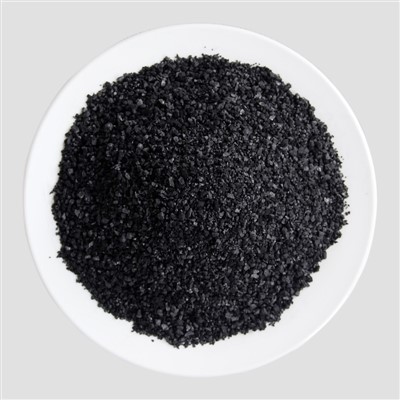
20–120 mesh granules |
Stronger adsorption, rich capillaries, low oil absorption |
Oil decolorization & filtration, continuous adsorption, catalyst carrier |
|
Decolorizing Clay |
Powder / Granule |
Decolorization rate ≥99%, residual oil 5–7% |
Industrial base oil, waste oil regeneration, finished oil decolorization |
|
Food-Grade Activated Clay |
200-mesh powder |
Strictly controlled heavy metals, meets food additive standards |
Edible oil refining, wine clarification, sugar juice purification |
|
Special Grade for Carbonless Copy Paper |
Powder |
Used with binders & additives to make color-developing coatings |
Invoices, computer paper, credit cards |
Part 4: Main Application Fields
1. Edible Oil Refining (Core Application)
Activated clay is the preferred adsorbent widely used for decolorization and refining of various vegetable and animal oils worldwide.
Main Functions
• Remove harmful pigments (chlorophyll, carotenoids, etc.)
• Remove peroxides, trace metals, soap residues, and phospholipids
• Remove aflatoxins, impurities, and odors
• Prevent color reversion and extend shelf life
Applicable Oils
• Vegetable oils: soybean, rapeseed, peanut, cottonseed, sunflower, palm, coconut, castor, tea, corn germ, rice bran, sesame, tung, safflower oil, etc.
• Animal oils: lard, tallow, fish oil, etc.
Usage Suggestion
Temperature, pressure, stirring intensity, and time should be optimized according to oil quality. Activate by heating to 80–100℃ before use. Heating above 300℃ causes loss of crystal water and structural changes, reducing decolorization effect.
2. Petroleum Industry
Petroleum refining & decolorization: petroleum, paraffin wax, kerosene, etc.
Waste oil regeneration: base oil, finished oil, waste oil.
Catalyst for petroleum cracking: solid acid catalyst for hydrocarbon cracking.
Lubricating oil polymerization agent, gasoline gas-phase refining agent.
3. Chemical Product Purification
Decolorization of paraffin wax, ethanol, sulfur, etc.
Benzene purification
Decolorization of fatty acids and higher glycolic acids
Cation removal via ion exchange
4. Food & Beverage Industry
Clarifier for wine and sugar juice
Beer stabilization to prevent turbidity and extend shelf life
Sugar refining & decolorization (cost reduced by ~60%; filter cake usable as feed)
5. Carbonless Copy Paper (High-Value Application)
Key raw material for color-developing coatings. Used for invoices, computer paper, bills, credit cards.
Advantages: clear printing, convenient, high efficiency, good confidentiality.
6. Environmental Protection
Wastewater treatment: color, turbidity, heavy metals, odor; printing & dyeing wastewater, municipal sewage, leachate
Oil adsorption in industrial wastewater
Waste gas treatment in sulfuric acid production
Deodorizer for refrigerators, toilets, etc.
7. Catalyst & Catalyst Carrier
As catalyst: hydrocarbon cracking, solid acid catalysis, light diesel cracking
As carrier: pesticides, fungicides, and other catalysts
8. Pharmaceutical & Defense Industry
Chemical defense absorbents and antidotes
Oral alkaloid antidotes
Vitamin A & B adsorbents
9. Other Applications
- Rubber reinforcing agent
- Coating filler
- Moisture desiccant
- Radioactive waste adsorbent
- Medium/high-temperature polymerization catalyst
- Fire extinguisher powder
- Feed additive (used filter cake)
Part 5: Technical Indicators & Selection Guide
Physical & Chemical Indicators (HG/T 2569)
|
Item |
First Class |
Premium Class |
Qualified |
|
Decolorization Power |
≥170 |
≥154 |
≥130 |
|
Activity (mol/kg) |
≥200 |
≥180 |
≥160 |
|
Free Acid (%) |
≤0.15 |
≤0.20 |
≤0.25 |
|
Moisture (%) |
≤5 |
≤8 |
≤12 |
|
Particle Size (200-mesh pass, %) |
≥95 |
≥93 |
≥90 |
|
Heavy Metal (Pb, mg/kg) |
≤10 |
≤10 |
≤15 |
|
Arsenic (As, mg/kg) |
≤3 |
≤3 |
≤5 |
High-Efficiency Activated Clay Indicators
|
Item |
Index |
|
Decolorization Power |
170–220 |
|
Decolorization Rate |
≥99% |
|
Activity |
180–200 mol/kg |
|
Moisture |
≤5% |
|
Free Acid |
≤0.2% |
|
Residual Oil Rate |
5–7% |
|
pH |
7–8 |
Selection Guide
|
Application |
Recommended Product |
Key Requirements |
|
Edible Oil Refining |
High-efficiency / Food-grade |
Decolorization ≥170, qualified heavy metals |
|
Petroleum / Waste Oil |
Decolorizing / Granular clay |
Decolorization ≥99%, residual oil ≤7% |
|
Continuous Adsorption |
Granular (20–120 mesh) |
Uniform particle, fast filtration |
|
Chemical Purification |
High-efficiency activated clay |
High activity, low free acid |
|
Wastewater Treatment |
General activated clay |
Strong adsorption, cost-effective |
|
Carbonless Paper |
Special color-developing grade |
High whiteness, good dispersibility |
Part 6: Handling & Storage Notes
Moisture-proof
Easily absorbs moisture; store sealed in a cool, dry, ventilated area.
01
Activation Before Use
Heat to 80–100℃. Over 300℃ causes structural damage.
02
Dosage
Generally 2%–5% of oil weight. Oil entrainment: ~20%–50% of clay weight.
03
Protection
Non-toxic, but dust may form; wear dust mask.
04
Waste Clay Treatment
Contains ~30% oil; oil can be recovered by pressing, solvent, or water method. Can be used as rubber filler or fuel.
05
Hot Tags: activated clay, China activated clay manufacturers, suppliers, factory, Calcium based Bentonite, Activated Clay, Organic Bentonite, Sodium based Bentonite, bentonite