

Part 1: Product Overview
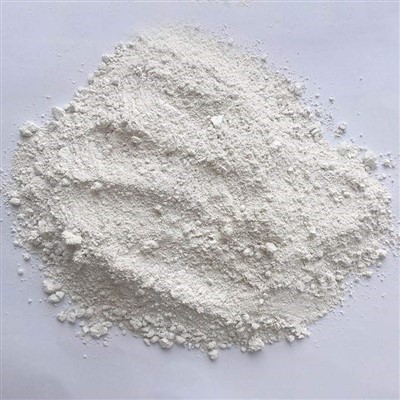
Sodium Bentonite is a water-bearing clay mineral mainly composed of montmorillonite, with Na⁺ as the dominant exchangeable cation between layers. Its general chemical formula is Naₓ(H₂O)₄(Al₂₋ₓMg₀.₈₃)Si₄O₁₀(OH)₂. Classified by the alkaline coefficient (≥ 1), sodium bentonite is the highest-performance grade in the bentonite family.
Our sodium bentonite products include natural sodium bentonite and artificially modified sodium bentonite series. High-quality calcium bentonite is selected and modified through wet or dry processes to fully replace Ca²⁺ with Na⁺ between montmorillonite layers, thus achieving superior properties over calcium bentonite.
The product features high expansion, high bonding, high suspension, and high thixotropy, making it an irreplaceable high-end basic material for metallurgy, drilling, foundry, environmental protection, and other industries.
Part 2: Core Advantages and Characteristics

Excellent Expansion Performance
Slow water absorption rate, but high water absorption and large expansion ratio. Expansion volume: 25–50 ml/g. Volume can expand dozens of times when encountering water.

Outstanding Dispersion and Suspension Properties
Good dispersion in aqueous media; colloidal value ≥ 99 ml/15g. Forms stable colloidal suspensions with excellent thixotropy, viscosity, and lubricity.

Strong Cation Exchange Capacity
High cation exchange capacity; methylene blue absorption ≥ 80 mmol/100g. Effectively adsorbs heavy metal ions and organic pollutants.

Excellent Thermal Stability
Good thermal stability and high-temperature resistance. Maintains structural stability under high temperatures in metallurgical pelletizing and foundry applications.

High Plasticity and Bonding Strength
High plasticity and strong bonding capacity; high hot-wet tensile strength and dry compressive strength. Ideal binder for foundry molding sand.

High pH and Good Chemical Stability
pH value: 8.9–10.Chemically stable and retains performance in various media.
Natural Sodium Bentonite vs. Artificially Modified Sodium Bentonite
|
Natural Sodium Bentonite |
Greater expansion force, high c-axis ordering, fine grain size, stronger dispersibility. |
|
Artificially Modified Sodium Bentonite |
Customizable performance, controllable modification conditions, suitable for diverse industrial requirements. |
Part 3: Main Application Fields
Known as the "universal clay", sodium bentonite is widely used in numerous sectors from traditional industries to high-end manufacturing. It has been applied in 24 fields and over 100 departments abroad, with more than 300 end products.
1. Metallurgical Industry – Iron Ore Pellet Binder
Sodium bentonite is mostly used as a binder for iron ore concentrate pellets.
Mechanism
Uses high bonding and thermal stability to produce uniform pellets with good reducibility.
Dosage
20–25 kg per ton of iron ore concentrate pellets.
Effects
Improves pellet strength, enhances reducibility, reduces pulverization rate.
Market Status
Metallurgical pelletizing accounts for about 32% of total bentonite consumption, dominated by sodium bentonite.
2. Drilling Engineering – Drilling Mud Suspending Agent (Core Application)
Used in oil and gas drilling to prepare drilling mud with high rheology and thixotropy.
Mud Properties
Good suspension, thixotropy, and filtration control; effectively carries cuttings and stabilizes the wellbore.
Engineering Value
Removes cuttings, reduces fluid loss, improves wellbore integrity, lowers drilling accident rates.
Scope
Onshore and offshore drilling operations.
3. Mechanical Foundry – Molding Sand Binder
Used as a binder in foundry molding sand, with better performance than calcium bentonite.
Defect Prevention
Good air permeability, avoiding defects such as blowholes, sand inclusion, and peeling, greatly reducing reject rates.
Precision Improvement
Ensures casting accuracy and smoothness; high temperature resistance and easy sand removal.
Performance Index
Wet compressive strength ≥ 0.23 MPa, high hot-wet tensile and dry compressive strength.
4. Organic Bentonite Raw Material (Deep Processing Base)
Sodium bentonite is an essential raw material for organic bentonite production.Na⁺ has a larger hydrated ionic radius than Ca²⁺, providing larger interlayer spacing favorable for organic cation exchange.
Organic Bentonite Uses
Anti-settling agent and thickener for coatings; thickener for high-temperature grease; consistency and permeability regulator for printing inks.
Requirement
Only sodium bentonite can be used, not calcium bentonite.
5. Textile Printing and Dyeing Industry
Used as filler, bleaching agent, antistatic coating; can replace starch for sizing and printing paste.
Sizing Agent
Replaces starch for yarn sizing, reducing costs.
Printing Paste
Thickener and suspending agent for printing coatings.
Antistatic
Imparts antistatic properties to fabrics.
6. Paper Industry
Paper filler
Improves brightness and smoothness of paper.
Coating pigment
Pigment and binder for coated paper.
7. Food Industry (High-end Application)
Used in food industry due to high purity and safety.
Oil decolorization
Decolorization and purification of animal and vegetable oils (after activation).
Liquor clarification
Clarification of wine, fruit juice, and stabilization of beer.
Food-grade standard
Strict control of heavy metals and harmful substances.
8. Coatings and Adhesives
Water-based Coatings
Thickener and anti-settling agent with stable suspension and thickening properties.
Adhesives
Used in white latex, floor adhesive, paste, etc., due to strong bonding.
9. Environmental Protection and Engineering
Waterproofing and Anti-seepage
Used in waterproof blankets and landfill liners.
Wastewater Treatment
Adsorbent for heavy metals and organic pollutants.
Radioactive Waste Treatment
Absorbent for radioactive waste.
10. Other Special Applications
Cat Litter
Clumping material for pet cat litter.
01
Emulsified Asphalt
Stabilizer for asphalt emulsification.
02
Desiccant/Moisture Absorbent
Uses strong hygroscopicity.
03
4A Molecular Sieve Raw Material
Synthesis of 4A zeolite from bentonite.
04
Petroleum Industry
Preparation of tar-water emulsions.
05
Part 6: Product Specifications and Technical Parameters
Product Series Table
|
Product Type |
Mesh Size |
Montmorillonite Content (%) |
Expansion Volume (ml/g) |
Main Application |
|
Metallurgical Pellet Grade |
200/325 mesh |
≥ 80 |
≥ 30 |
Iron ore pellet binder |
|
Drilling Mud Grade |
200/325 mesh |
≥ 70 |
≥ 25 |
Drilling mud suspending agent |
|
Precision Casting Grade |
200/270/325 mesh |
≥ 80 |
≥ 30 |
Foundry molding sand binder |
|
Organic Bentonite Grade |
200/325 mesh |
≥ 85 |
≥ 35 |
Organic bentonite production |
|
Coating Grade |
325/400 mesh |
≥ 75 |
≥ 25 |
Water-based coating thickener |
|
Paper Grade |
325 mesh |
≥ 70 |
≥ 20 |
Paper filler |
|
Food/Pharma Grade |
200/325 mesh |
≥ 85 |
≥ 30 |
Oil decolorization, liquor clarification |
|
Environmental Grade |
100/200 mesh |
≥ 75 |
≥ 25 |
Waterproof blankets, landfills |
|
Natural Sodium Grade |
200/325 mesh |
70–88 |
30–50 |
High-end applications, export |
Technical Specifications of Sodium Bentonite
|
Item |
Unit |
Index |
|
Montmorillonite Content |
% |
60–88 |
|
Expansion Volume |
ml/g |
25–50 |
|
Colloidal Value |
ml/15g |
≥ 99 |
|
2h Water Absorption Rate |
% |
250–350 |
|
Moisture Content |
% |
≤ 12 |
|
Wet Compressive Strength |
MPa |
≥ 0.23 |
|
Methylene Blue Absorption |
mmol/100g |
≥ 80 |
|
Na₂O Content |
% |
≥ 1.28 |
|
pH Value |
– |
8.9–10 |
|
Particle Size (200/325 mesh) |
% |
≥ 95 |
Hot Tags: sodium-based bentonite, China sodium-based bentonite manufacturers, suppliers, factory, Calcium based Bentonite, Activated Clay, Organic Bentonite, Sodium based Bentonite, bentonite