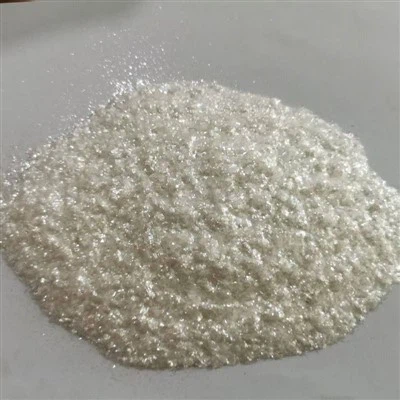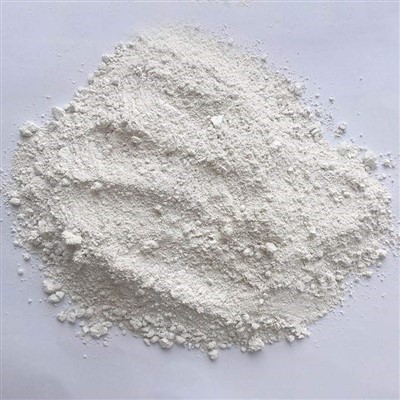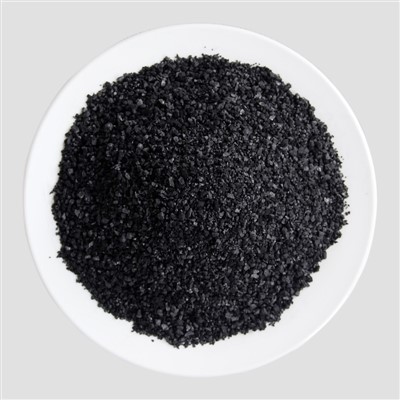


Bauxite Product Introduction
Also known as alumina ore or bauxite ore, its main component is alumina (Al₂O₃). It is a hydrated alumina mineral containing impurities, presenting as an earthy mineral. Depending on iron content, it appears white, off‑white, brownish‑yellow, or light red. It is the optimal raw material for primary aluminum production (accounting for over 90% of global bauxite output) and is widely used in refractory materials, abrasives, chemical products, high‑alumina cement, and other industries.
Our bauxite products are sourced from high‑quality ore deposits, available in two major series: raw bauxite and calcined bauxite. Among them, high‑alumina calcined bauxite is processed via high‑temperature calcination at 1400℃–1700℃, featuring a dense structure, stable physical and chemical properties, and a refractoriness above 1780℃. Products are strictly graded according to Al₂O₃ content and impurity indexes to meet diverse industrial requirements.
Core Value of Bauxite
From aluminum alloys for national defense and aerospace, to furnace linings in iron and steel smelting, and mold materials for precision casting, bauxite is a key non‑metallic mineral supporting modern high‑temperature industries and basic material sectors.
Part 2: Core Advantages & Characteristics

High Alumina Content & Graded Quality
Al₂O₃ content ranges from 50% to over 90%, with low‑, medium‑, and high‑grade products. High‑alumina bauxite (Al₂O₃ ≥85%) features high bulk density and low impurities, making it ideal for high‑end refractory materials.

Excellent Refractory Performance
High‑alumina calcined bauxite has a refractoriness above 1780℃, strong chemical stability, and good physical properties, capable of withstanding severe high‑temperature furnace conditions.

High‑Temperature Calcination & Dimensional Stability
Fully sintered in rotary or shaft kilns, the product has high bulk density (≥3.25 g/cm³), low water absorption (≤3.0%), and outstanding thermal shock resistance and dimensional stability at high temperatures.

Controlled Impurities & Stable Composition
Beneficiation and homogenization processes strictly control harmful impurities such as Fe₂O₃, TiO₂, K₂O+Na₂O, ensuring stable chemical composition to meet formulation requirements across applications.

Diverse Particle Sizes & Complete Specifications
Aggregates: 0–1mm, 1–3mm, 3–5mm, 5–8mm, 8–15mm. Powders: 100 mesh, 200 mesh, 325 mesh, 600 mesh, 800 mesh. Suitable for refractory castables, ramming mixes, precast blocks, coatings, and more.
Part 3: Main Product Classification
|
Product Type |
Form |
Al₂O₃ Content |
Key Features |
Main Applications |
|
Raw Bauxite |
Run‑of‑mine / Lumps |
50–75% |
Contains crystal water, high loss on ignition |
Aluminum production, light‑burned material, PAC |
|
High‑Alumina Calcined Bauxite |
Aggregate / Powder |
≥80–90% |
Calcined at high temp, dimensionally stable |
Refractory products, castables, ramming mixes |
|
Bauxite Aggregate |
0–1 / 1–3 / 3–5 / 5–8 / 8–15 mm |
≥85% |
Reasonable gradation, high strength |
Refractory castables, ladle materials, precasts |
|
Bauxite Fine Powder |
100–800 mesh |
≥85–86% |
Fine particle size, good dispersibility |
Foundry coatings, ceramics, wear‑resistant materials |
|
Homogenized Bauxite |
Aggregate / Powder |
≥85% |
Uniform composition, stable performance |
High‑alumina bricks, advanced refractories |
Part 4: Main Application Fields
Bauxite applications fall into metallurgical and non‑metallurgical categories. Although non‑metallurgical uses account for a smaller share, they cover an extremely wide range of industries.
1. Aluminum Industry (Core Application, >90%)
Bauxite is the optimum raw material for metallic aluminum production. Over 90% of global bauxite is used here. Alumina is extracted via the Bayer or sintering process, then electrolyzed into metallic aluminum. Aluminum alloys and products are widely used in:
Defense & Aerospace
Aircraft structural parts, spacecraft components.
Automotive
Lightweight bodies, engine parts.
Electrical & Chemical
Cables, heat exchangers, chemical vessels.
Daily Life
Doors/windows, packaging, electronic housings.
2. Refractory Industry (Core Non‑Metallurgical Use)
High‑alumina calcined bauxite is a critical refractory raw material with refractoriness up to 1780℃ and strong chemical stability. Main refractory products:
High‑alumina bricks
Blast furnaces, hot blast stoves, EAF roofs, cement rotary kilns.
Refractory castables
Ladles, tundishes, monolithic furnace linings.
Monolithic refractories
Gunning mixes, ramming mixes, plastics.
Ladle castables
Magnesia and bauxite clinker for ladle linings.
3. Precision Casting
Calcined bauxite powder is used to produce precision casting molds for:
• Military & Aerospace: Complex structural components.
• Communications & Instruments: High‑precision metal parts.
• Machinery & Medical Devices: High‑temperature, corrosion‑resistant parts.
4. Chemical & Environmental Protection
Bauxite is used to produce various aluminum compounds:
• Polyaluminum chloride (PAC): Raw material for water treatment.
• Aluminum sulfate, aluminum chloride: Paper sizing, water treatment flocculants.
• Activated alumina: Catalysts, carriers, adsorbents for refining and pharma.
5. Abrasive Materials
High‑alumina bauxite is a key raw material for high‑grade abrasives:
• Brown fused alumina: Produced in electric arc furnaces for grinding wheels, abrasives, polishing powders.
• High‑performance grinding wheels: High hardness and wear resistance.
6. Ceramics & Glass Industry
• Ceramics: Improves whiteness, mechanical strength, and thermal stability.
• Glass: Adding 3%–5% Al₂O₃ enhances melting point, viscosity, strength, and chemical stability.
7. Other Applications
Foundry coatings
Lost‑foam and sand casting, improving surface finish.
Wear‑resistant materials
Ceramic wear parts, flooring.
Welding electrode fluxes
Strict requirements for Al₂O₃, Fe₂O₃, P, and S.
Part 5: Product Specifications & Technical Parameters
High‑Alumina Calcined Bauxite
|
Item |
JYL‑16 |
JYL‑18 |
Testing Standard |
|
Al₂O₃ (%) |
50–80 |
50–80 |
GB/T 6900 |
|
Fe₂O₃ (%) |
<0.8 |
<0.8 |
GB/T 6900 |
|
SiO₂ (%) |
<4.0 |
<4.0 |
GB/T 6900 |
|
TiO₂ (%) |
≤4.0 |
≤4.0 |
GB/T 6900 |
|
Bulk Density (g/cm³) |
≥3.25 |
≥3.25 |
GB/T 2999 |
|
Refractoriness (℃) |
≥1790 |
≥1790 |
GB/T 7322 |
|
Water Absorption (%) |
≤3.0 |
≤3.0 |
GB/T 2999 |
|
325‑Mesh Residue (%) |
<0.1 |
<0.15 |
- |
|
Oil Absorption (ml/100g) |
14±1 |
12±1 |
- |
|
Mohs Hardness |
≥9.0 |
≥8.5 |
- |
Particle Size Specifications
|
Product Form |
Specification |
Main Applications |
|
Bauxite Aggregate |
0–1mm, 1–3mm, 3–5mm, 5–8mm, 8–15mm |
Refractory castables, ramming mixes, precasts |
|
Bauxite Fine Powder |
100 mesh, 200 mesh, 325 mesh |
Refractory mortars, foundry coatings, ceramics |
|
Ultrafine Powder |
600 mesh, 800 mesh |
High‑grade coatings, wear materials, precision casting |
Hot Tags: bauxite powder, China bauxite powder manufacturers, suppliers, factory, bauxite, Bauxite Powder